
The Magic of Visual Schedules: Transforming Daily Routines
How visual supports can transform daily routines and reduce anxiety for both children and parents.
DAILY LIFE
Jennifer Davies
3/4/20262 min read
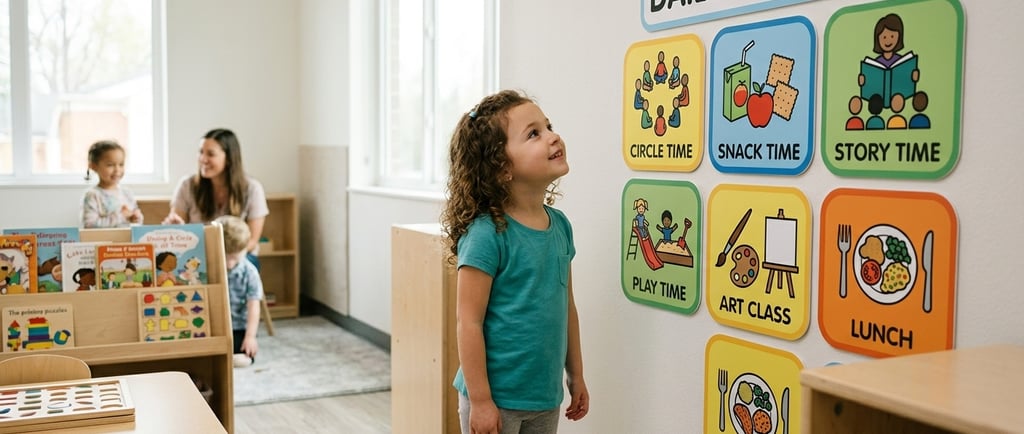
The Power of Visual Supports
A visual schedule is a transformative tool that reduces daily anxiety by providing a clear, tangible roadmap for the day. While especially effective for autistic children, these supports benefit neurotypical kids and parents alike by creating a predictable environment for the entire household.
1. Why Visuals Work
Spoken words are fleeting, but a visual representation remains constant.
Reduced Cognitive Load: Visuals remove the stress of remembering spoken instructions, which can quickly disappear for a child processing a lot of information.
Tangible Reference: Pictures or lists provide a permanent reminder of what needs to be done.
Ease of Transitions: Having a clear "what's next" helps children navigate changes between activities with significantly less stress.
2. Creating Your Own Schedule
You do not need expensive software to build a functional system; the best tool is the one you will actually use.
Low-Cost Materials: You can use a whiteboard and marker, index cards for individual steps, or even a simple photo album on your phone titled "Morning".
Focus on Transitions: Start with one challenging part of the day, such as the morning or bedtime routine.
Simplify the Steps: Break the routine down into 4–6 manageable tasks, such as "Bathroom," "Get Dressed," and "Brush Teeth".
3. Engaging the Child
The "magic" of a schedule is in the child's participation.
Physical Interaction: Let your child move a card or check a box when a task is finished.
Sense of Agency: Physically moving a task from "To Do" to "Done" provides a small "dopamine hit" and gives the child a sense of accomplishment and control over their day.
Collaborative Refresh: When a schedule stops working because a child has grown or routines have changed, involve them in refreshing the steps to boost their confidence and decision-making skills.
4. Expanding Your Visual "Hacks"
You can expand this concept into other areas of the home:
First/Then Boards: For higher-stress tasks, use a simple two-square board. "First: Brush Teeth," "Then: 5 Minutes of Play." This leverages behavioral strategies to increase cooperation.
Choice Boards: Provide visuals for snack or play options. This empowers non-verbal or limited-verbal children to communicate their needs, reducing the frustration that leads to meltdowns.
Environmental Labeling: Use the same icons from your Autism Hacks and Hearts routine charts to label toy bins or clothing drawers, fostering independence in cleaning up and getting dressed.
Parent Heart Note: Visual schedules won't make life perfect, but they provide the predictability needed to ease the hard parts of everyday life for both you and your child.